The delight of walking alone


- Dates and Opening times
Fri 5 – Sun 7 Jun, 11am-6pm
Mon 8 – Sun 21 Jun,
Mon – Fri, 12pm – 5pm,
Sat – Sun, 11am – 6pm- Venue
Burns Street Studios, 15 Burns Street, G4 9SA
- Participants
- Anya Paintsil
- Presented by
The Glasgow School of Art
- Supported by
Glasgow School of Art; additionally supported by Glasgow International with funds from the Scottish Government's Festival EXPO Fund
- Accessiblity
Level Access, Step Free: The venue has ramped or level access and/or lifts to upper floors
Toilets: The venue has toilets available for visitors, but these are not accessible
Accessible Toilets: The venue has a wheelchair accessible toilet
Bike Rack: There is cycle parking at the venue
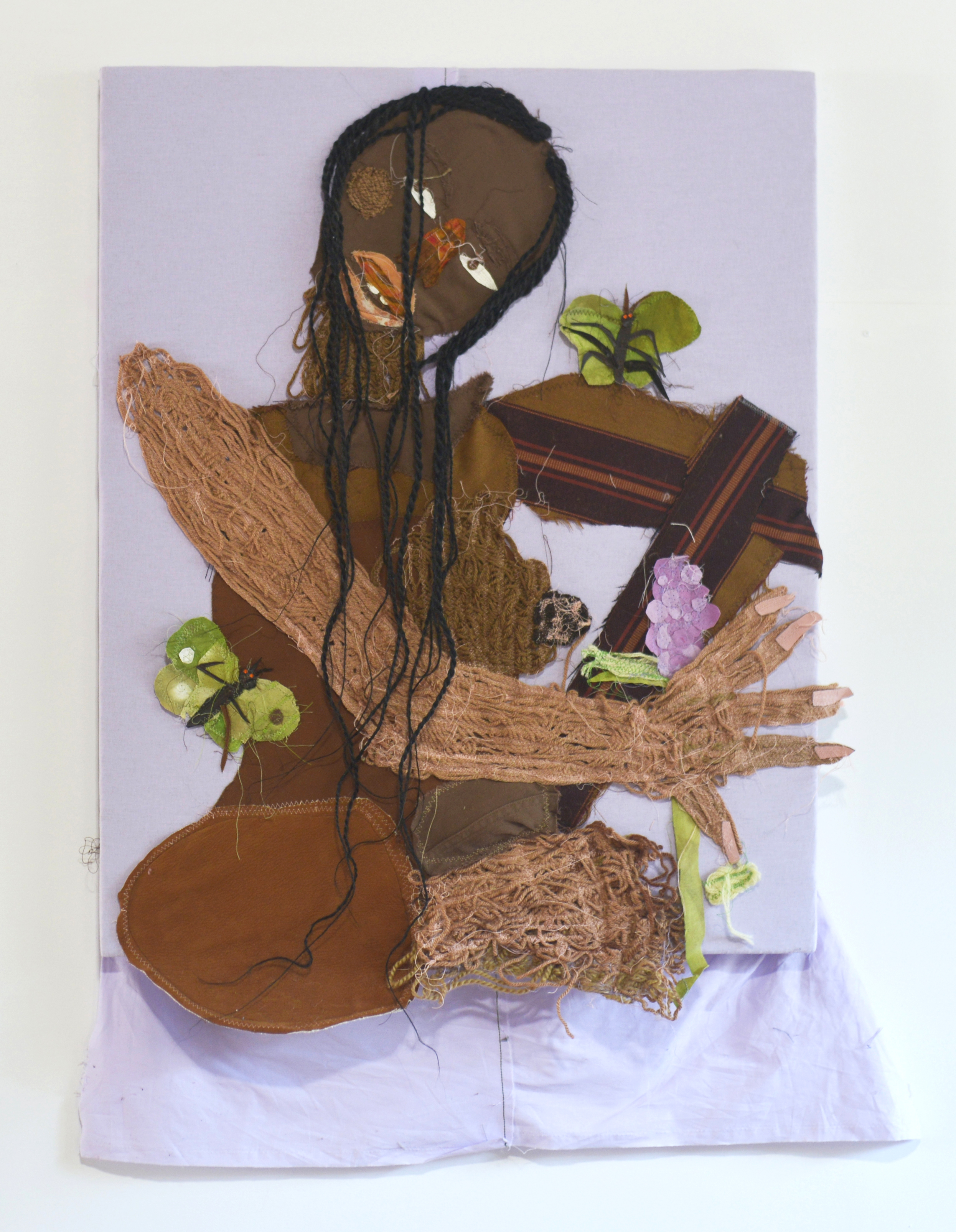
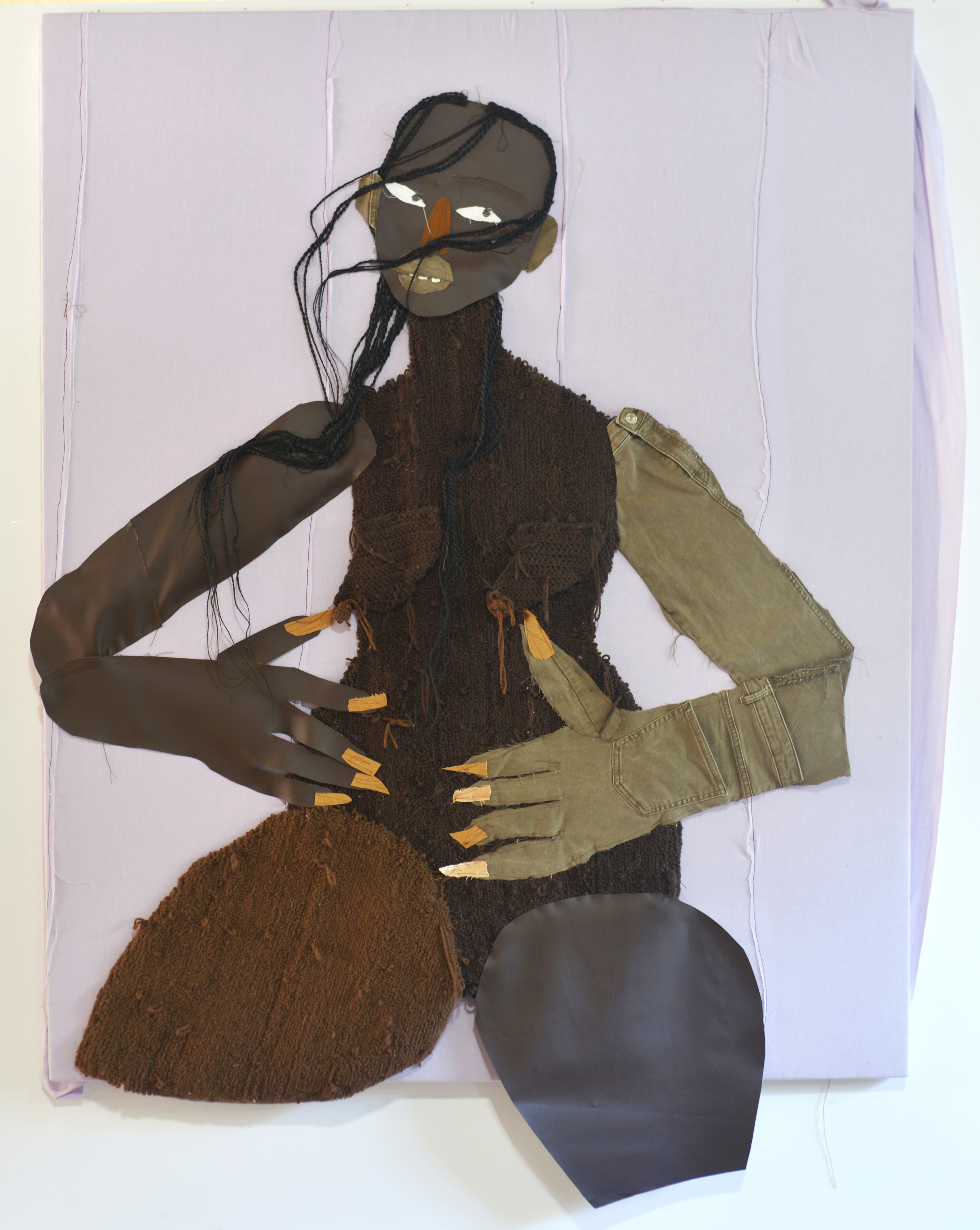
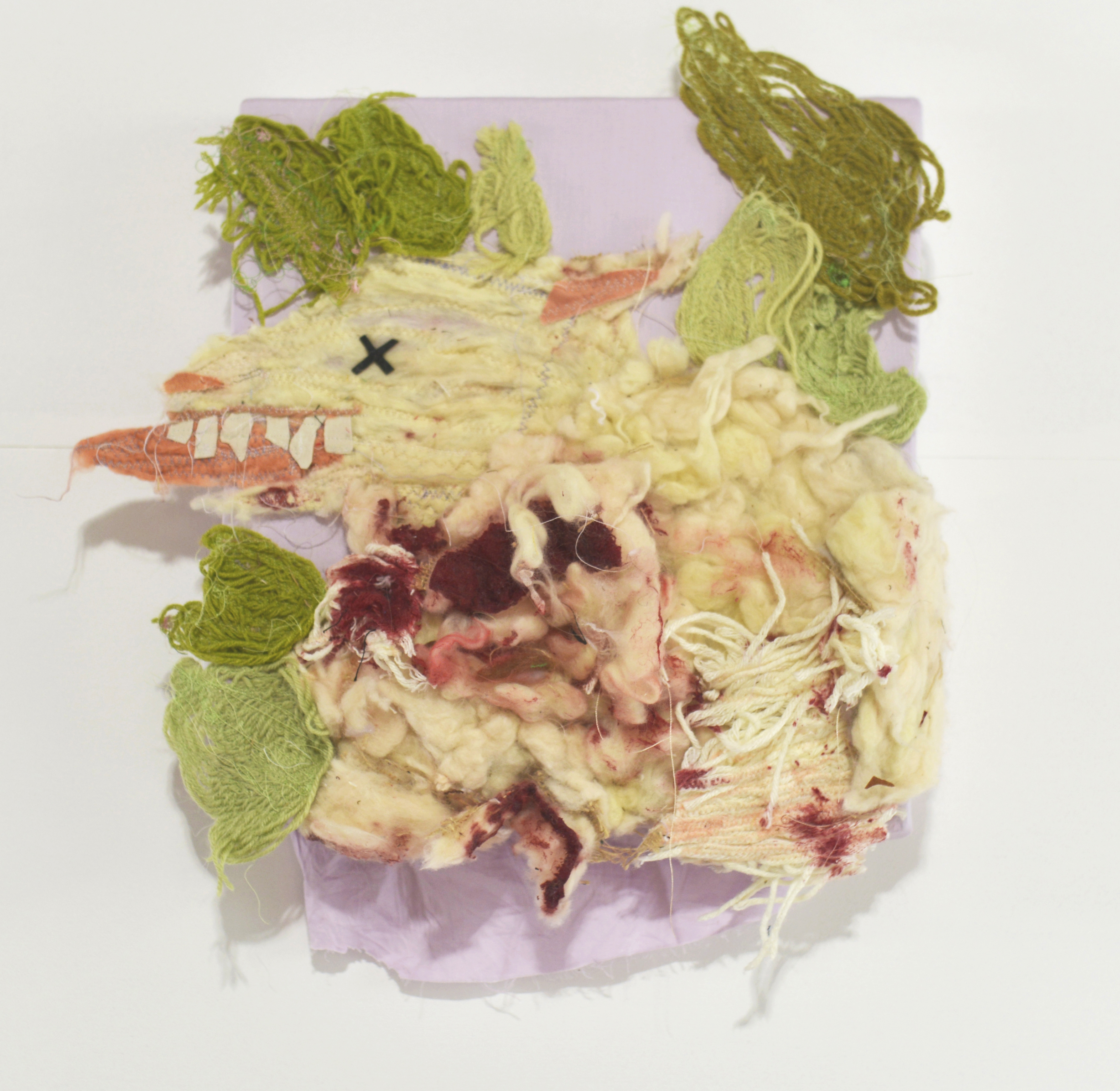
The delight of walking alone presents the work of Welsh and Ghanaian artist Anya Paintsil. Based in Glyn Ceiriog and London, Anya draws inspiration from her childhood in North Wales and her ancestral Fante tradition of figurative textiles. Anya combines craft practices she was taught as a young child, including rug making, appliqué, and hand embroidery, with afro hairstyling techniques to create large scale portraits.
Anya’s figures explore the possibilities and politics of non-representative depictions of the Black figure, drawing from African art history, identity, personal narratives, and humour. Anya deliberately refuses to root her work in the European fine art canon; instead, her visual language is based in traditional West African craft and art—carvings, wood sculptures, masks. She exchanges the hard materials for soft in an interrogation of gendered labour, particularly the labour of working-class women.
Anya has recently exhibited at Ames Yavuz, London and Tŷ Pawb, Wrexham. Her work is in collections including the Stedelijk Museum, Amsterdam, The National Museum of Wales, The Whitworth Gallery, Manchester, and The Women’s Art Collection at Cambridge University.